Safe payment methods to accept when selling a car

Quick insights
- Safe payment options for private car sales may include verified cashier’s checks, bank wire transfers or reputable escrow services.
- Meeting at a bank can help you confirm funds and reduce the risk of scams before releasing your car.
- You may want to avoid personal checks and digital payment apps, as they may carry higher risks of fraud or payment reversals.
Selling your car privately might seem overwhelming; with concerns about scams and payment fraud, it’s natural to wonder what payment to accept when selling a car. Ensuring you’re paid reliably is as important as finding the right buyer. By learning about the safest payment methods and a few best practices, you can help protect both yourself and your finances throughout the process. Whether this is your first private sale or you’re hoping for a refresher to avoid common pitfalls, this article will go over how to accept payment for a safer car sale.
Why payment type matters when selling a car
Selling a car privately involves more than just agreeing on a price; the payment method itself carries implications for your financial security. Some sellers may be unaware of the fraud risks associated with certain payment types, making it important to carefully consider the payment types to accept when selling a car.
When preparing to sell a car, it can be helpful to differentiate between secure transactions and those that could leave you vulnerable. You may also want to consider communicating your preferred payment method(s) clearly to the buyer.
Common payment methods for private car sales and their risks
As you navigate the ins and outs of a private car sale, you may encounter some common payment methods, each with distinct advantages and risks. Understanding these may help you evaluate what payment to accept when selling a car.
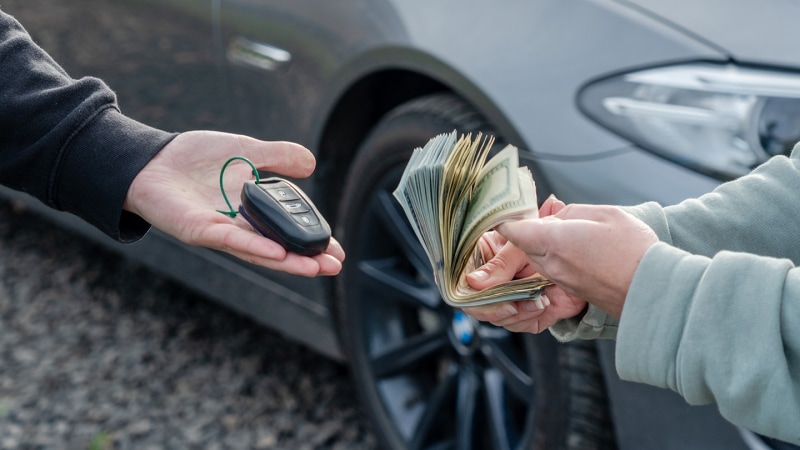
- Cash payments: Cash is often seen as the simplest and most immediate form of payment. However, it can carry risks, particularly with large sums where counterfeiting can be a concern. There can also be personal safety risks associated with carrying or handling large amounts of money.
- Personal checks: Personal checks are generally not recommended for private car sales. They are susceptible to fraud, as funds may not be available when the check is presented, even if it initially appears to clear. This may lead to a bounced check and a complete loss for the seller.
- Digital payment apps: Digital payment apps like PayPal®, Apple Pay® and services like Zelle® may be more convenient for smaller transactions, but they can be risky for high-value purchases like a car. Many of these services offer little to no seller protection against payment reversals or disputes, which can leave you without your money or your vehicle.
- Bank wire transfers: Bank wire transfers are a highly secure method, as funds move directly from the buyer’s bank to yours. Once received, wire transfers are generally irreversible, making them very reliable. However, they require the buyer to initiate the transfer from their bank, which might not always be instantly verifiable on your end.
- Escrow services: Reputable escrow services hold the buyer’s payment in a secure third-party account until all conditions of the sale are met. This method may provide a stronger protection for both buyer and seller, helping to ensure the transaction is finalized before funds are released to you.
- Verified cashier’s checks or money orders: These instruments are generally more secure than personal checks, as they are drawn on the bank’s own funds or guaranteed by the institution. However, counterfeiting is still a risk. It is important to verify the check's authenticity with the issuing bank before releasing the vehicle.
Best practices for a secure transaction
When using safer payment options for private car sales, consider incorporating the following best practices into your selling process:
- Meet at a bank: Conducting the transaction at the buyer's bank is often one of the safest ways to accept payment for a car. This helps you verify the buyer’s identity, confirm funds or witness the creation of a verified cashier’s check. You can also handle title transfer paperwork at the bank, making it a more secure and efficient meeting place.
- Verify funds before releasing the car: Regardless of the payment method, avoid releasing your vehicle or signing over the title until you have absolute confirmation that the funds are legitimately in your account. For cashier’s checks, call the issuing bank (using a verified number, not one provided by the buyer) to confirm authenticity. For wire transfers, wait for the funds to fully clear into your account. Remember to be cautious of immediate clearance messages that might later be reversed.
- Trust your instincts: If something about a buyer or their payment method feels off, it likely is. Be wary of buyers who pressure you, offer to pay more than the asking price (especially without seeing the car), or insist on using unusual payment methods. Scammers may try to create a sense of urgency or offer excuses for why they cannot meet in person or use standard secure payment methods. Consider canceling the sale if you have any doubts about the legitimacy of the buyer or payment.
The bottom line
Selling a car privately can be a rewarding experience when handled carefully. By prioritizing payment methods and implementing smart transaction practices, you can help protect yourself from potential risks. Verify funds independently and choose payment options that offer strong seller protection. Taking these precautions can help ensure a secure and successful sale.